Home > Resources > Blog > Can Aluminum Foil Containers Be Used in the Oven
Can Aluminum Foil Containers Be Used in the Oven
By
xcfoilpack
|
10 1 月, 2026
|
5 Minutes Read
Can Aluminum Foil Containers Be Used in the Oven
Can Aluminum Foil Containers Be Used in the Oven
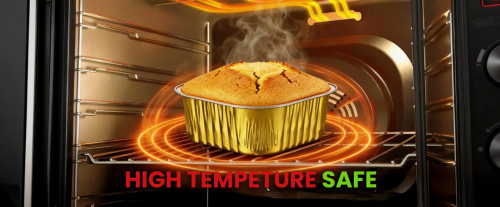
Yes, aluminum foil containers can be used in the oven—but they must be handled with care to ensure safe usage. Below is a detailed guide on how to properly use aluminum foil containers.
Introduction to Aluminum Foil Container Materials
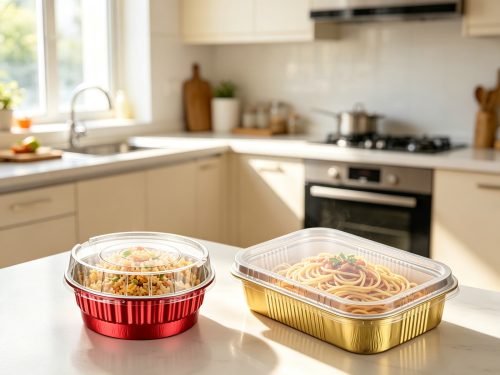
Aluminum foil containers are made from food-grade aluminum foil through processes such as rolling and stamping. They are available as either single-use or reusable options and are widely used for food packaging, storage, and heating due to their lightweight nature, easy moldability, and good sealing properties.
Food-grade aluminum foil has high purity and extremely low levels of impurities, meeting food safety standards. Many containers also feature a food-grade PET coating on the surface, which effectively prevents direct contact between aluminum and food, ensuring safety under normal usage conditions.
Aluminum foil exhibits excellent thermal and electrical conductivity—properties that not only make it suitable for oven use but also impose specific handling requirements.
How Ovens Work
To determine whether aluminum foil containers can be safely used in an oven, it’s essential to understand how ovens operate. Ovens generate heat via internal heating elements (such as resistance wires or quartz tubes) and transfer that heat to food through thermal radiation and conduction, allowing food to cook evenly within a closed environment.
Roles of Aluminum Foil Containers in Baking
During baking, aluminum foil containers serve three primary functions:
Efficient Heat Conduction: Thanks to aluminum’s superior thermal conductivity, these containers quickly absorb and distribute heat evenly to the food inside, reducing the risk of undercooked or burnt spots.
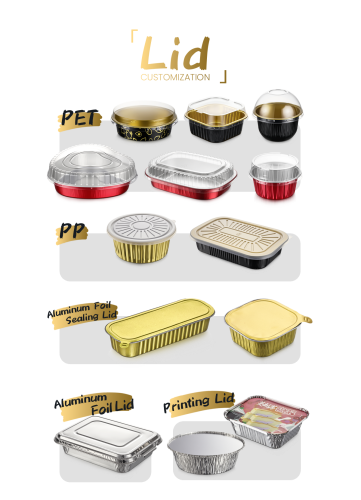
Moisture Retention: When sealed with an aluminum lid, these containers offer strong airtightness, minimizing moisture loss during baking—ideal for meats, vegetables, and other ingredients that benefit from retaining tenderness.
Easy Cleanup: Using aluminum foil containers prevents food residue and grease from sticking directly to the oven interior. After the meal, you can simply discard the container, significantly reducing cleaning effort.
Advantages of Using Aluminum Foil Containers in the Oven
Compared to common baking materials like ceramic, glass, or stainless steel, aluminum foil containers offer several distinct benefits:
Higher Thermal Efficiency: Ceramic and glass have poor thermal conductivity, requiring longer preheating and cooking times. Aluminum foil containers heat up quickly, shorten baking time, and promote even cooking.
Lightweight and Portable: Their thin, lightweight design makes them far more convenient to carry than heavy ceramic or glass dishes—ideal for takeout restaurants (containers can be delivered directly to customers without needing return) and outdoor grilling.
Flexible Shaping: Aluminum foil containers can be molded into various shapes (e.g., trays, bowls, boxes) to accommodate irregularly shaped foods. Some are even foldable to fit different oven sizes.
Lower Cost: Disposable aluminum containers eliminate the need for washing, saving time and labor. Their low unit cost also makes them more economical than durable but breakable ceramic alternatives.
Important Precautions When Using Aluminum Foil Containers in the Oven
Although oven-safe, aluminum foil containers require careful handling to avoid hazards:
Use Only Food-Grade Containers: Always choose products clearly labeled “food-grade,” “oven-safe,” or “for food contact.” Never use industrial-grade aluminum foil containers, as they may contain harmful impurities that can leach into food when heated.
Avoid Contact with Heating Elements: Aluminum is electrically conductive. If the container touches a live heating element, it may cause short circuits or sparks. Keep the container at least 5 cm (2 inches) away from all heating elements.
Never Use in Microwave Mode: Aluminum foil reflects microwaves. Do not use these containers in combination microwave-oven appliances when the microwave function is active—it can damage the appliance or even cause fire. They are safe only in conventional (pure baking) oven mode.
Limit Use with Acidic or Alkaline Foods: Avoid prolonged high-temperature baking of highly acidic (e.g., tomatoes, lemon, vinegar) or alkaline (e.g., baking soda-based) foods, as these can react with aluminum over time.
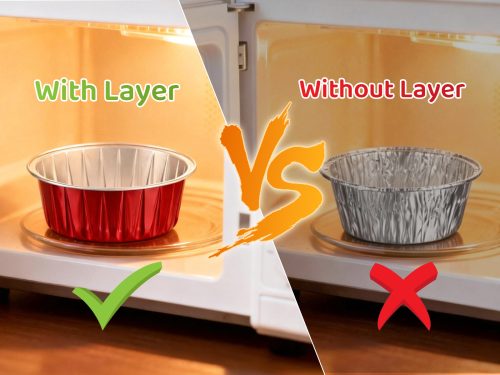
Microwave mode can be used with coated aluminum foil containers, while uncoated products can only be used in baking mode.
Risks of Improper Use
Ignoring these precautions can lead to serious consequences:
Safety Hazards: Contact with heating elements may cause short circuits, oven damage, or fire.
Food Contamination: Non-food-grade containers may release toxic substances when heated, posing long-term health risks.
Microwave Damage: Using foil in microwave mode reflects microwaves, potentially damaging the magnetron or causing electrical failure.
Poor Cooking Results: Over-sealing without ventilation traps steam, leading to soggy food or container rupture.
Aluminum Migration: Extended exposure to acidic foods at high temperatures can degrade the protective oxide layer on aluminum, allowing aluminum ions to migrate into food—potentially affecting taste and safety.
How to Use Aluminum Foil Containers Correctly for Baking
Follow the principle of “choose the right container + operate properly”:
Select the Right Container: Choose food-grade, oven-safe aluminum foil containers sized appropriately for your ingredients to ensure even heating.
Prepare the Container and Food: For fatty foods, lightly oil the container interior for easier cleanup. If moisture retention is needed, cover the top with foil—but pierce several small holes with a toothpick to allow steam to escape.
Place Properly in the Oven: Position the container on the middle rack, ensuring ample clearance from oven walls and heating elements. Use only conventional (non-microwave) baking mode, and set temperature/time according to your recipe.
Post-Baking Handling: Wait until the oven cools before removing the container to avoid burns. If used for acidic foods, discard the container after use—do not reuse.
Alternative Materials for Oven Baking
If aluminum foil containers aren’t suitable, consider these alternatives:
Ceramic: Stable, high-heat-resistant, and non-reactive—ideal for cakes, breads, and dishes where flavor purity matters. However, it heats slowly and requires preheating.
Glass (e.g., Borosilicate): Heat-resistant and transparent, allowing visual monitoring of food. Great for casseroles or custards, but heavy and prone to thermal shock if exposed to sudden temperature changes.
Stainless Steel: Durable, corrosion-resistant, and thermally efficient—excellent for roasting meats. Use only food-grade stainless steel, and avoid prolonged cooking of acidic foods.
Parchment Paper (Baking Paper): A temporary alternative for lining baking sheets. While it lacks container functionality, it prevents sticking and is very safe.
Conclusion
In summary, food-grade aluminum foil containers are perfectly safe for oven use, offering advantages in heat conduction, convenience, and cost-effectiveness. However, safe usage hinges on following proper guidelines: always select certified oven-safe containers, avoid contact with heating elements, never use in microwave mode, and exercise caution with acidic or alkaline foods. If you remain concerned about using aluminum foil, reliable alternatives like ceramic, glass, or stainless steel are available. With mindful handling, aluminum foil containers can be a practical and efficient tool in your oven-baking routine—balancing both safety and performance.


 Blog Aluminum Foil Pans Across Oceans
 Blog Can Aluminum Foil Containers Be Used in the Oven