Aluminum Foil Pans Across Oceans:The Diligence of Factory Workers Hidden on Every Global Table
By Danelle Gauden • 5 minute read
Within the global food supply chain, aluminum foil pans are often dismissed as generic disposable packaging—functional, interchangeable, nothing more. Yet for us working in export trade, every carton rolling out of our warehouse carries far deeper meaning. Each vessel embodies the meticulous craftsmanship of our factory floor workers, and stands as a promise to deliver authentic, heartfelt culinary experiences to dining tables thousands of miles across the sea.
This is far more than a story about metal packaging. It is a story of human connection: a bridge linking the hands that shape every foil pan on our production lines to the hands of chefs and home cooks worldwide who fill them with food. The meals they prepare nurture families, mark cultural celebrations, and preserve beloved local food traditions passed down through generations.
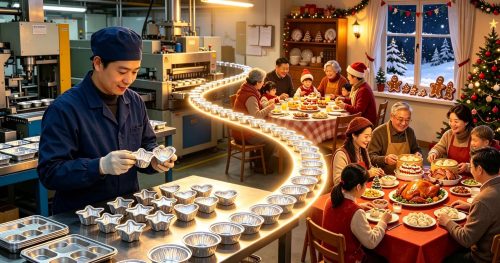
Step onto the production floor of any of our partner factories, and you’ll witness a rhythmic, almost artistic workflow unfolding. Stamping operators, quality inspectors and stacking specialists each hold a vital role, transforming raw aluminum coils into finished foil pans that meet rigorous international export standards.Most overseas buyers never get to see these unseen details woven into every product:
• Precision repetitive work to maintain consistent thickness tolerances across millions of pans;
• Unwavering concentration from inspectors who spot and remove even the tiniest surface defects with nothing but their eyes;
• Long hours spent standing to inspect the smooth rolled rim of every single pan, eliminating sharp edges that could cut chefs’ hands;
• A quiet, genuine sense of pride knowing their work will hold golden croissants baked in Parisian bakeries, or sizzling Tex-Mex fajitas served from Texas food trucks, sealing in every drop of savory sauce without a single leak.
These are not nameless factory laborers. They are skilled, seasoned professionals, many with over a decade of industry experience. They understand that the foil pans they craft shift after shift will grace family dinners, festive holiday feasts, and comforting late-night meals for people all across the globe.
Aluminum Foil Pans
American Thanksgiving: One Pan to Hold a Whole Family’s Reunion
On the fourth Thursday of each November, ovens in households all across the United States are filled with roasting turkeys. Whole turkeys weighing more than a dozen pounds, marinated in butter and seasoned with rosemary, thyme and sage, sit steadily inside large aluminum foil roasting pans for a slow bake of three to four hours.
Aluminum foil roasting pans are a Thanksgiving staple thanks to aluminum’s outstanding heat conductivity. Heat spreads evenly throughout the turkey, keeping breast meat tender and moist while dark drumstick meat stays rich and flavorful. Best of all, these pans are lightweight, so home cooks can carry hot pans effortlessly. After the holiday meal, they can simply throw the pans away, saving the hassle of scrubbing grease-covered cookware.
Back at our factories, workers producing these oversized roasting pans know this batch is rushed to fulfill Thanksgiving orders. Before shipment, they double-check the reinforced base ribs and thick rolled rims with extra care. A pan loaded with a full turkey carries substantial weight, and regular thin foil vessels would buckle and collapse under the load.
None of these factory workers have ever attended a Thanksgiving dinner or seen a golden roasted holiday turkey in person. Still, they know every pan they craft will hold precious reunion moments for countless American families. When the shipping container’s doors closed on shipment day, one worker whispered quietly: “Hope every family over there enjoys a lovely, satisfying feast.”
Deep Aluminum Foil Roasting Pans & Oktoberfest: One Pan, Two Heat Settings for Crispy Skin & Tender Meat
Every October, Munich’s massive Oktoberfest beer tents buzz with lively crowds. Brass bands play upbeat Bavarian folk tunes, giant beer mugs clink together nonstop, and the undisputed star on every table is traditional roasted pork knuckle with crispy crackling and tender meat.
Authentic Bavarian pork knuckle requires a two-stage roasting method. The pork is marinated overnight in beer, juniper berries and caraway seeds, then placed inside deep aluminum foil roasting pans with a splash of broth. Covered with a foil lid, it slow-braises until the meat falls off the bone; the lid is then removed for high-heat dry roasting to crisp up the skin. This dual-temperature cooking process is fully achievable within a single foil pan.
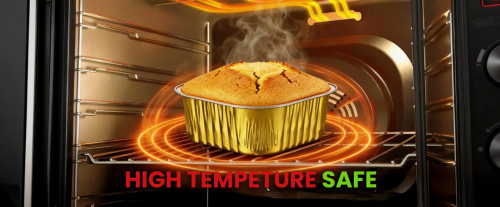
Deep foil pans excel at this cooking style thanks to outstanding heat resistance and reliable sealing performance. When covered, they trap steam to tenderize meat thoroughly; uncovered under high heat, they stay structurally intact without warping, peeling or releasing unwanted odors to alter the food’s natural flavor.
Our factory’s mold technicians repeatedly tweak the curved base corners when manufacturing these deep roasting pans tailored for pork knuckles. Sharp angular corners would trap rendered pork grease, leading to burnt, smoky residue during baking; overly shallow curves would cause the loaded pan to sag under the weight of whole pork hocks. The final curved design used today is a golden balance refined through countless trial tests.On the evening these specialty deep pans were packed into shipping containers, several factory workers tuned into a live stream of Oktoberfest on their phones. On screen, local guests lifted one-liter beer mugs in cheers, backed by lively brass music and crowds filled with joy. After watching for a while, one worker smiled and said: “Their holiday celebration is just as lively as our family’s Lunar New Year back home.”
Perforated Aluminum Foil Steam Trays & Lunar New Year Overseas: Hometown Flavors Travel Across Oceans
Every year right before the Lunar New Year, Asian grocery stores and Chinese supermarkets worldwide stock up on perforated aluminum foil steam trays, the essential tool for overseas Chinese families to make dumplings for reunion dinners.
Dumplings stand as the heart of every Chinese New Year feast. In Chinese communities across London, Vancouver, Sydney, New York and Toronto, families gather on New Year’s Eve to fold homemade dumplings. Neatly arranged on perforated foil steam trays lined with cabbage leaves to prevent sticking, the trays can be stacked in layers and steamed over high heat for eight minutes. Aluminum transfers heat rapidly, and steam circulates evenly through the tiny holes to wrap every dumpling fully. This keeps wrappers intact and fillings juicy, delivering bursts of savory broth with every bite, just like authentic homemade dumplings back in China.
These custom steam trays tailored to fit overseas household steamers only account for a small portion of our factory’s total output in Foshan, yet they carry special meaning as pre-holiday export orders. Our production and R&D teams fine-tune the size and layout of perforations repeatedly: tiny holes restrict steam flow and leave undercooked dumplings, while overly large holes trap standing water and turn dumpling bottoms soggy. The trays feature reinforced raised rims to avoid bending or collapsing when stacked in multi-layer steaming, compatible with both home steamers and compact commercial ovens in overseas Chinese restaurants.
Every worker on the production line knows where these steam trays are bound. Packed into shipping containers, they travel across the globe to Chinese people living far away from their homeland. Though our factory staff have never set foot in foreign countries, they fully understand each stamped, perforated and polished tray holds the homesickness of countless overseas Chinese. For expats scattered around the world, steamy dumplings form the core ritual of Lunar New Year. Our aluminum foil steam trays become a quiet bridge, carrying the familiar flavors of hometown across thousands of miles of ocean.
Shaped Mini Foil Pans & Scandinavian Christmas Gingerbread: Stars and Hearts Bound for Northern Europe
When Christmas arrives, families across Sweden, Denmark and Norway bake traditional pepparkakor gingerbread. Tiny star, heart and snowflake aluminum foil pans are baking essentials. Dough pressed into these molds bakes into neatly shaped holiday cookies.
Northern Europe sits at high latitudes, with only four to five hours of daylight in winter. Locals treasure their limited bright hours for family time instead of scrubbing greasy bakeware, making disposable foil pans a beloved seasonal pick.
The factory uses dedicated precision stamping dies to make these special-shaped pans under strict standards: sharp cookie patterns, smooth burr-free rims and well-balanced non-stick coating that lets gingerbread slide out fully without cracking.Before each batch ships, factory workers take sample checks on pan curves and tweak stamping machines to fix tiny defects. They have never laid eyes on snow-laden Christmas streets in Northern Europe, yet they know these small pans will travel across oceans to warm countless holiday tables.
Foil Pans Carry More Than Goods Across the Ocean
A wide ocean separates our factory-made foil pans from the holiday tables they serve overseas, yet the meticulous care our workers put into every product travels straight across those waters.
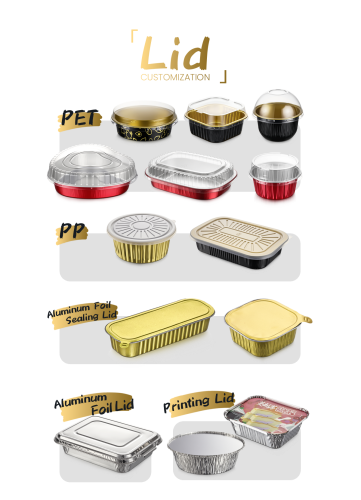
The next time you roast a Thanksgiving turkey, bake a French Bûche de Noël, slow-cook Bavarian pork knuckle or steam dumplings for Lunar New Year with our foil pans, pause to notice the refined craftsmanship: smooth rolled rims without sharp edges, sturdy bodies that won’t warp under high heat, and well-fitting lids that seal in steam and juices. None of these premium details come by accident.
They are crafted through endless rounds of inspection and edge trimming by factory workers thousands of miles away, whose fingertips grow worn raw from constant, repeated manual checks on every single pan.
What you taste alongside your food is far more than global cuisine — it is the wholehearted sincerity of a team of craftsmen on the other side of the ocean.



 Blog Aluminum Foil Pans Across Oceans